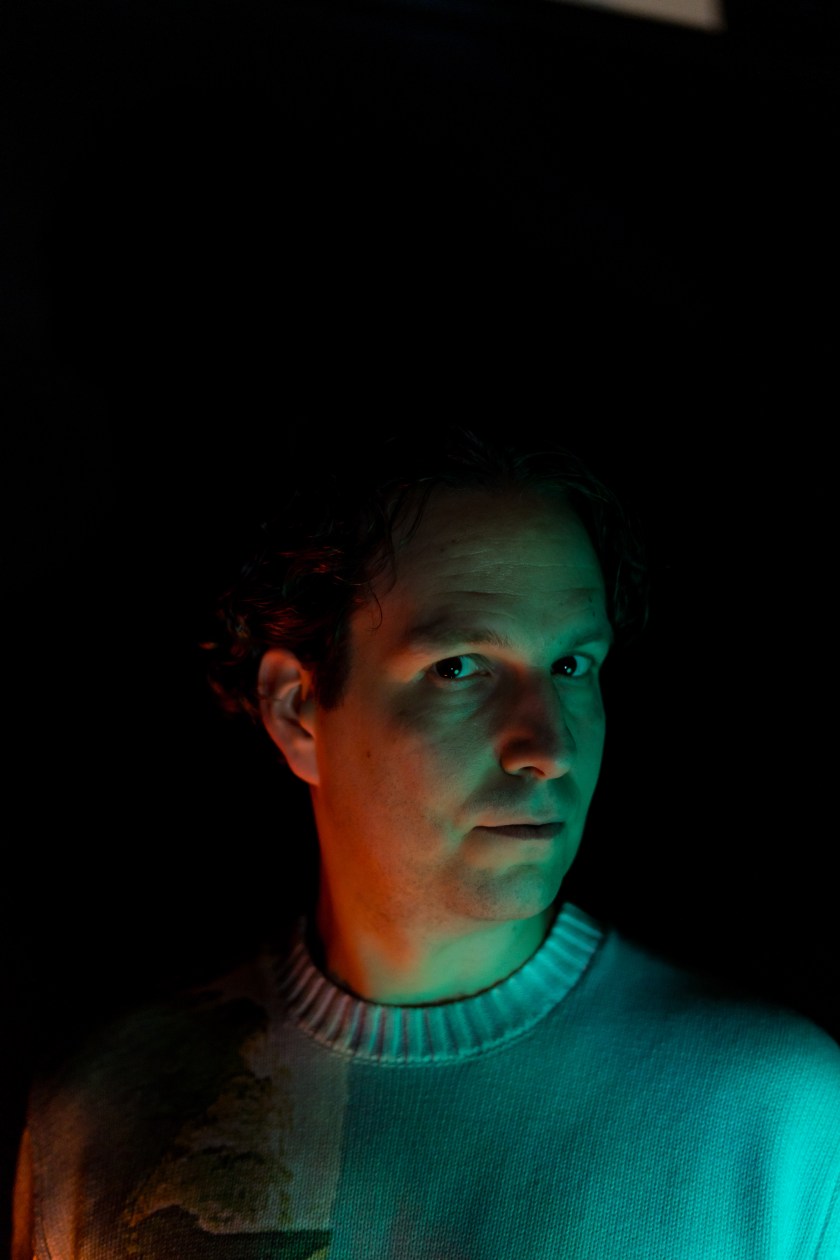
GrayBeat has a unique and engaging sound and the latest work, Special Characters, features people and techniques that a fresh and eminently danceable. You can see the whole show live on March 14 at Can Can Wonderland. I can’t think of a more perfect place!
Please tell me about your music and how you got from jazz fusion-style drummer to cleverly produced rich beats with a message. It seems like a long, storied journey.
Haha thanks. Yes, it certainly was, and in my mind, I still have perhaps the longest part yet still ahead of me. But, that said, you’re right. I’m not young anymore, and music has been a big part of my life since about as early as I could walk.
The first entry into the historical record involves me wearing diapers and adding some strategically placed skips to my dad’s vinyl collection. I mean hey, they had some good beats going on and how was I supposed to know a little dancing toddler could do anything wrong?? We did a little kindergarten choir, 3rd grade violin lessons and eventually school band as well, but with my parents being music lovers and with my dad being a professional visual artist there was a lot of free-flowing creativity bouncing around in the air for me to absorb.
I mean, ok, I’ll grant you that sounds pretty par-for-the-course, or even blasé. But, I gotta mention it. When I get into a creative flow, I definitely find myself delving deep into the subconscious, a place where a sense of emotion fuses with our tangible sensations. These early experiences helped shape the buttresses of the musical foundation I lean on when I’m in this state of consciousness, whether I’m Jazz drumming or intricately crafting a record.
Moving on… Shout out to the public education system for first exposing me to what would become my first true passion, which was drums and percussion (especially the drum set). Got to play drums in an original high-school grunge rock band and record my first records. Shout out to Carter for lending that legendary Tascam 4-track! I think I learned more about recording than I realized at the time. I got into Jazz with a school Jazz band and eventually found Miles Davis, Tony Williams and John Coltrane.
But, here’s the thing. It’s one thing being into drums and playing as an instrumentalist and sometimes as a background vocalist. It seemed illogical and perhaps even silly to think of myself as an up-and-coming producer. For me it took a special sort of mind trip. This mind trip was to Macalester College, where I met my African music mentor, an Ethnomusicologist and master drummer named Sowah.
Now, I was still playing and recording on the side in Jazz bands and jam bands, and I spent seven years avidly studying and learning under Sowah, but I didn’t start producing music until nearly twelve years later. That was some mind trip! Yep, the way that the cultural learning reshaped my previously very Western-influenced musical upbringing and gave me the mental firepower I needed in 2016 when I found myself producing my first beats at home using some simple yet powerful tools at the time.
Not only did I carry a very technical and mathematical understanding of music from my Western background, but the lessons from African music relieved me of its burdensome mental shackles. That’s when the hard part started!
I had no freaking clue how to produce a record. I had no sense of what the terminology was, or what a good workflow looked like. I was literally spending months using the rote methods of trial-and-error, logical deduction and some internet searches, desperately trying to create anything that could plausibly, or even remotely sound like a record.
The best part of that time was me realizing I didn’t give a shit about whether I was good at it yet. I knew from my teaching that consistent effort and learning was key, and I would eventually dig my way out of this hole. Doing. Did anything else matter but doing? No. Becoming something requires doing the thing. Long nights, weekends, estrangement from friends or family (except the important ones lol), sucky bounced track after sucky bounced track. It sounded weak, harsh, brittle, cold and just wasn’t all-around not right. Day-after-day, week-after-week, month-after-month.
During this period I discovered that I had found my truecalling in life, something that felt in my bones I could do at a very high, world-class level and I was dreadfully terrible at it. For every one good decision, I would spend hours figuring out what I did wrong (which I now realize was usually about a 100 bad sonic decisions lol).
I eventually released an EP, and then an album. I was working full-time and carrying a somewhat normal life at least for a few minutes each week when I wasn’t producing music or eating. Then COVID hit just when I was starting to meet local musicians and producers in my community and thinking about what a GrayBeat live show might look like. Not good! Naturally, I decided to make lemonade out of that lemon and produce a live album in 2020-2021. It was a bit tongue-in-cheek maybe, but it was done safely at home without an audience and I hope it gave some musicians some inspiration during those times. I still pretty much sucked at this point, though.
Now, I know what you’re saying, “Enough of the self-flagellation, dude.” Let me clarify how I feel. A few years ago, I was emotionally affected by rejection. Now, I eat rejection for breakfast. I would imagine if you talk to any other serious producer, they feel the same way. It’s up to us to figure out how to become better and rejection tells you things, even if it doesn’t seem apparent until much later.
Happily, while I’m still not where I want to be (and only I know where I’m going), I’m much better at production now. Special Characters is by far my biggest achievement, and it’s the culmination of three years of gigantic career growth and knowledge gained from studying under true musical success stories such as Mel Mulligan and 2x Grammy-winning producer Mike Mangini (Digable Planets, Baha Men, Jonas Brothers). Shout out to my team at Modern Musician as well, where I learned the ins and outs of how to build a true fan base independently and where we’re building the next generation of software to empower indie artists. Most importantly, Special Characters was influenced by intimately getting to know and understand the musical tastes of my true fans, the Grayliens, over the last few years.
Listening to the new album, Special Characters, I feel like I’m on the dancefloor of a video game on a rocket ship. There’s a lot going on, but it makes sense. Songs like GalactiCruisin’ and Baby Blue leave me with an anxious heartbreat but weird complacent calm of someone who just wants to dance. How intentional are the connections between the sounds you make and impact on the listener’s physical reaction?
Well, it’s all very intentional, though keeping in mind the experience will ultimately be subjective and open to interpretation. When I’m playing drums, I think about the feeling I’m imparting on the music. With production, every decision flows from an intention to impart a feeling to the music. That’s why it’s so challenging. A production can be timeless, yet stir specific emotions at different times. Since dancing to music is a synergistic and universal activity that spans all emotions and cultures, that is something I almost always hope to inspire through the beats and the rhythms.
The video for Concrete Labyrinth is gorgeous. The song feels like an ode to The Amazon. Can you tell me about the inspiration?
Many years ago, I spent some extended time studying and traveling in South America, including some time in the Amazon. In the video, the Amazon is one of the symbols that represents the ‘Guarana’ lyric in the song which alludes to the psychoactive properties of positive memories.
Manaus, Brazil is a small to medium sized town situated remotely on the Amazon river. I stayed there for less than 24-hours and found myself in the desolate local airport at 4:30am preparing to leave for Bolivia when I witnessed something remarkable, something that should have felt routine or even mundane.
It was an estranged-looking family sitting next to each other, but not too close. The daughter was listening to earbuds and the parents were anxiously waiting, perhaps to depart. It seemed clear they were not traveling together though. There was tension, and then dismissal. “She’s lost,” her Dad said to her Mom. “Lost?,” I thought. What does it mean to be lost when we’re all sitting here in the airport together? Then, she said, “It’s like Bob Marley said, it’s just a concrete jungle!”, hitting me with an unfamiliar but catchy lyric that encapsulated a familiar concept from my Anthropological studies. She then resumed her lack of eye contact.
I assume if she was leaving the Amazon it wasn’t on her own accord, but, either way, this family seemed destined to be lost to each other whether they kept each other’s company going forward or not. So, that’s the experience that birthed the concept of Concrete Labyrinth and the meaning behind the video. The lyrics and images are meant to embrace the question, ‘what does it really mean to be lost?’, promote the importance of traveling, finding new experiences and ways of thinking, and most importantly allowing yourself to find yourself in those places that will create the memories to sustain you for a lifetime.
Diamond Mic is another song that holds a mirror to society. Please tell me about the song and what role music has in getting people to think about our community, our world.
Music is about bringing society together. Very often, this is about going out into the town square and conveying a message about a wrong that is done to someone and calling out another member of the group for their misdeeds.
Diamond Mic started out as just a beat. It didn’t have a message, but when I started working with Hookdiggy, we discussed what the lyrical concept should be. I thought about all the times in our lives when we need to stay cool, calm and collected under pressure which is what I felt like when I listened to the beat. I mentioned as a touchpoint, a time when someone called the authorities on me when I was going door-to-door community organizing on the West side of St. Paul.
He literally right then was like that’s all I needed and went to work… A while later he came back with the whole concept of driving while black. The lyrics, no doubt culled from personal experience, aren’t about whether there’s dope in the trunk or not. He’s calling a double-standard and relating a specific cultural experience in a way that puts us all in his shoes for a moment. In the end, the music, the lyrics, the rhythm and the tone direct this important social message into our hearts in a way that only art can do.
Please tell me about the upcoming album release show.
It’s a dream come true. Neon Night TC has put some amazing local talent on the roster with Color In Reverse, Zero and Night Ryder opening the show. I’ll be bringing my high-tech, nowhere-else-in-the-world improvisational audio-visual performance to my favorite stage, the Red Room at Can Can Wonderland. The establishment has remodeled this space over the last few years and it’s fantastic. It’s on Friday, March 14th and the music starts at 9PM. For a bonus treat, I suggest getting there early to take advantage of the food and drink offerings, as well as the unlimited arcade games you get for your $16 entry.
By the way, I’ll be officially releasing the Special Characters CD at the show, and I’ll even be running a Special Characters T-shirt drawing. I have some new free stickers and guitar picks for everyone to have too.
There will be plenty of dancing on the floor (not on the tables!), and we’re encouraging everyone to come dressed up in futuristic cosplay, or just your best fit for a night out. We’ll have a station where you can make yourself some colorful rave accessories. Masks will be available.
 Mostly Minnesota