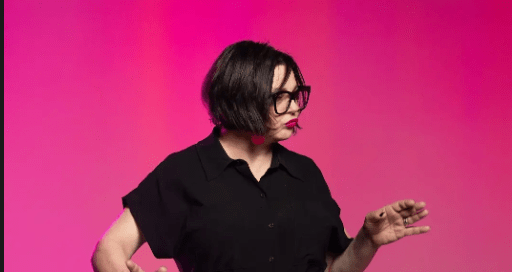
Carey Marshall is a Minnesota–based singer-songwriter and certified life coach and mom and more. Her music is engaging and inspiring.
Please tell us about yourself and your music.
I didn’t grow up dreaming of being a singer or a songwriter. I actually didn’t write my first song until I was in my 30s. I already had four children by this time, and was a stay at home mom. I didn’t have a ton of time to focus on my music, but every time I shared something I had written, the people around me encouraged me to keep going. Eventually, it became impossible to ignore the idea that maybe I really did have something special to offer.
Then something wild happened. A complete stranger reached out, asked to meet me at a coffee shop, and handed me a check for thousands of dollars. They told me they wanted to help me make my first album. I had never even considered making an album before that moment, but their belief in me gave me the courage to take the leap.
In 2015, I released my first album, Distant Lands under the name Carey Keavy. That’s when I really dove in and started performing everywhere I could. I spent years putting in the work, playing venue after venue, learning what it means to show up on stage and connect with people.
Today, music is a big part of my life. I work as a worship pastor, and usually do one large and special show every year which involves theatrics and zany elements. It’s an opportunity for me to express myself through creative arts such as theatre and film.
Songwriting helps me express what I can’t always say out loud. It gives me space to feel, to create, and to connect. And one of the best parts of it all is being surrounded by the amazing people in Fawn & the Flame. I love our little musical family.
The journey surprised me. And honestly, I can’t wait to see where it goes next.
What words of advice would you have for someone who is looking for their voice?
First, trust that you already have one. It might feel quiet or unsure right now, but it’s there. A lot of women struggle with this. We’re so used to tending to everyone else that we decide our own dreams can sit in the background. After a while, we start believing they don’t matter anymore.
That was me for a long time. I was constantly pouring myself out and leaving nothing for the things that made me come alive. Eventually, I realized something important: the passions inside me weren’t random. They were part of who I am. Ignoring them didn’t make me a better mom or wife. It just made me feel smaller.
When that clicked, I stopped treating my dreams like they were optional. I had four little kids and a very full life, but I figured out how to make both family and music fit. I wrote songs when the house finally got quiet. I booked gigs that worked around my obligations as a parent. I dragged gear into venues after bedtime routines. I took my sixteen year old son out on the road with me for a tri-state tour. It wasn’t easy, but it was empowering.
So if you’re looking for your voice, here’s what I’d tell you:
- Don’t wait until everything feels perfectly aligned. That moment rarely comes. Start where you are. Try things. Show up for the spark inside you, even if it’s just in tiny ways at first.
- Little by little, you’ll discover a strength and clarity in yourself that you might not have seen before.
- Your voice is part of your purpose.
- Let it grow. Let it be heard.
There’s so much love in the love in your newest collection, Year of the Locust, did you set out to write about love? Or was love, in its multiple forms rise organically to the top of you mind?
In the beginning, I wasn’t trying to write about love at all. I was trying to make sense of the unraveling of a 20-year marriage. When everything you thought was solid starts to crack, you become painfully aware of how much love can hurt… and how much you still need it. The earliest songs came from that place, the ache, the confusion, the longing for something that felt like it was slipping away no matter how tightly I held on.
But what I didn’t expect was how the writing would change as my life changed. After the divorce, I kept showing up to the page, not because I wanted to write a record, but because I needed to figure out who I was without that history attached to me. Somewhere in that process, love started to look different. I felt this slow, quiet transformation happening inside me. I learned how to love myself again, how to listen to my own voice, how to trust that there was still a possibility of rebuilding what I thought was completely lost.
And then… new love found me. Not the fairytale version, but a real love. A healing love. A love that teaches you to breathe again. The kind that says, “You’re safe to be exactly who you are now.” Those emotions began to color the songs too: joy, passion, hope, and the surprising softness that comes when you finally feel seen.
So the album unintentionally became a map of the journey. Love at its most fragile. Love when it disappoints. Love reclaimed. Love reborn. I didn’t choose love as the theme. My life did. And these songs are simply the record of my heart finding its way back home.
What was your relationship to music before you started to play?
Music has always felt like a friend to me, even long before I ever thought of myself as someone who could play or sing. As a kid, I didn’t grow up in a musical household or have formal lessons. But every Christmas, my mom would buy me a slightly nicer Casio keyboard than the year before. I don’t think either of us knew why I was so drawn to them. I would just sit for hours pressing the demo buttons and imagining the songs hidden inside the keys.
As a teenager, a friend of mine showed me how to play a couple songs she had written on the piano. I had no idea what I was doing, but I learned those songs by heart. The funny part is, I only knew how to play those songs and nothing else. I didn’t understand chords, music theory, or how to make things up on my own.
Years later, I spent almost ten years watching people sing and play at church, wishing I could do what they were doing but feeling too afraid to try. Eventually, I found the courage to show up at a worship rehearsal, sat at the piano…and instantly realized I did not belong there. I only knew one chord…C. You can’t exactly join a band with just a C chord. I went home from that rehearsal in tears, convinced I should never go back.
But I had a choice to make: quit, or try again. So I dug out an old dusty chord book someone had given me years earlier, and I decided to learn. I showed up to rehearsal every single week for six months, fumbling through chords, sweating, shaking, hoping no one would notice how green I was. And then one night, they told me I was finally ready to play in front of the church.
That moment changed everything.
I still refused to sing, though. If I ever sang in front of someone, I would make them turn around while I tried to get the words out. I was terrified. But little by little, I started singing background harmonies while I played piano, and eventually, I was asked to lead. I suffered intense stage fright for three whole years before the panic became manageable.
Somewhere in the middle of all that, I started writing silly songs about dogs and ice fishing on a cheap guitar I could barely play. And to my surprise, people loved them. They laughed, they clapped, they encouraged me. For the first time, I wondered if maybe I really did have something to say.
That encouragement led me to my first-ever performance at a small coffee shop in Watertown, Minnesota in 2006. I was 32 years old, standing there with a handful of original songs. I don’t remember those songs anymore, but I’ll never forget how it felt to finally share my voice.
Looking back, I didn’t enter music through the front door. I snuck in from the side, quietly, almost by accident. But once I got inside, I realized this was where I belonged all along.
Do you have any upcoming shows or other ways that readers could find you and your music?
I don’t perform live very often these days, usually just one big show a year, but you can always find me online at www.fawnandtheflame.com or stream my music on Spotify and other listening platforms under Fawn & the Flame.
 Mostly Minnesota