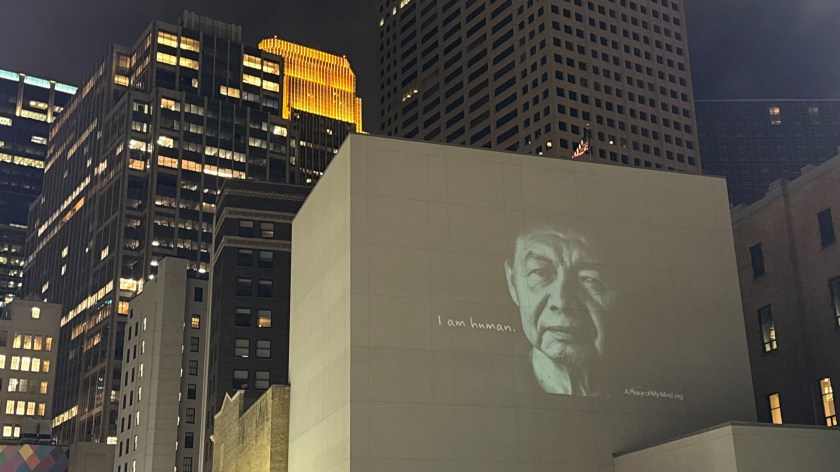
John Noltner is award winning peace photographer based in Minneapolis. He has traveled around the world. telling stories through touching photographs. He has brough that skill home to tell some stories in the Twin Cities. They are moving. For folks who are doing mutual aid, rapid response, patrolling or protesting, it an opportunity to take a breath and remember our individual and collective humanity.
Please tell us about yourself and your work.
I’m a photographer by trade and a storyteller by obsession. Years ago I started A Peace of My Mind because I kept bumping into moments that didn’t fit the headlines — people looking past hatred, finding grace in small acts, carrying scars and surprising softness. I wanted to create a space where ordinary people could tell, in their own words and faces, what peace looked like to them.
My process is simple and intimate: a portrait, a conversation. I sit with someone long enough to pull out the story they usually keep to themselves, and then I try to make an image that honors how they want to be seen. The photographs and the short essays that accompany them are meant to do two things at once — to record a personal truth and to invite a stranger to recognize a piece of themselves. That recognition, I’ve learned, is the engine of empathy.
Over the years the project has taken me into living rooms, churches, and prisons. I’ve met veterans wrestling with trauma, youth organizing for change, families rebuilding after violence, and people who simply want to be heard. What surprised me most was how often peace shows up not as a grand resolution but as a choice people make day after day — a quiet refusal to let anger define their next step.
For me the work is as much about listening as it is about making pictures. When someone trusts you with a painful or tender moment, you carry responsibility: to frame it honestly, to preserve their dignity, and to let that story sit in the world where it might do some small good. I’ve seen conversations open after an exhibit that would never have happened otherwise — neighbors talking across fences, classrooms wrestling with complexity, strangers admitting that they too are tired and hopeful.
If there’s been a throughline in A Peace of My Mind, it’s this: peace isn’t a single destination. It’s a choice, a practice, a faltering daily habit, and sometimes an act of courage. My role — my privilege — is to bring those acts into the light and remind readers that the world is full of people choosing peace in ways both ordinary and profound.
You’ve done a lot of work all over the world on culture, community, politics and strife. How does that experience influence your reaction to what’s happening in Minnesota now?
I’ve spent years listening to people whose lives are shaped by conflict — in cities, classrooms, and courtrooms — and that habit of listening is what guides me now.
Minnesota is home for me, so what’s happening here lands differently: it’s not an abstract story on the other side of the world, it’s my neighbors, my streets, my history. That closeness makes me both more alert to pain and more hopeful about possibility.
From my work I’ve learned that public moments of crisis reveal private practices: where people choose to respond with anger, with silence, or with the hard work of repair. My instinct is to look for the small acts of care and the honest conversations that undergird long-term change — the listening circles, the people who show up for one another, the leaders who admit mistakes and make amends. At the same time I recognize the necessity of accountability and structural change; empathy without justice is incomplete.
So I’m watching, listening, and trying to create space for stories that complicate the headlines. I want Minnesotans to see one another fully — the fear, the grief, the courage — because that recognition is where empathy begins and collective action becomes possible. And I want the bigger world to see that in us as they watch the news unfold. My hope is that out of this painful moment we’ll all choose practices that sustain peace: honest reckoning, meaningful policy shifts, and daily acts that rebuild trust.
Please tell us about your I Am Human exhibit.
In the headlines from my community and in the news from around the world, at a very basic level, we are failing to see the humanity in one another. Collectively, we are leaning into conflict over compassion. Contention over connection. As I thought about how I would use my art to respond to the news of the day, I want to remind myself and others of that basic humanity.
So I started making the sort of close and intimate black and white portraits of people that make up much of my work. And we added the words “I Am Human” on each. And now we are projecting those photos in the city, large and on the exteriors of buildings, as a way to say to the community, “I see you, I hear you, and you matter.”
And while I recognize that for many people, this might not be the right time to stand in front of a camera and get their photo taken, for many others, this might be the perfect time.
It’s a simple and gentle form of solidarity and community and a reminder of the beautiful and diverse faces who call this place home.
As I’ve been making portraits, I haven’t asked anyone’s name or contact information, their ethnicity or citizenship, their identity or faith background. None of that really matters in this body of work. It is simply a reflection and celebration of the humans who make up the rich fabric of this place we call home.
Sounds like you took many of the photos at places of community or mutual aid. What did you learn from being in those spaces?
I’ve seen and I’ve learned again, that people will show up for one another. I’ve seen and I’ve learned again, that people can be cruel, but also that people can offer profound acts of kindness, that people will find creative responses to impossible situations, and that people are determined to look out for one another. In the past several weeks I’ve seen people delivering groceries to others who are afraid to leave their homes. I’ve seen people march in the streets in sub-zero weather. Chefs giving away free meals. Singing vigils filling our city with song.
At one church, an urban farmer who grows food for the community led folks in a call and response to address the fear and uncertainty in the community. The refrain was simple. “I am brave because we are brave.”
I am brave because we are brave.
I’ve learned again, and I am reminded again, that we are better together.
Where can people learn more about the work?
https://apeaceofmymind.org/2026/01/28/i-am-human/
 Mostly Minnesota